

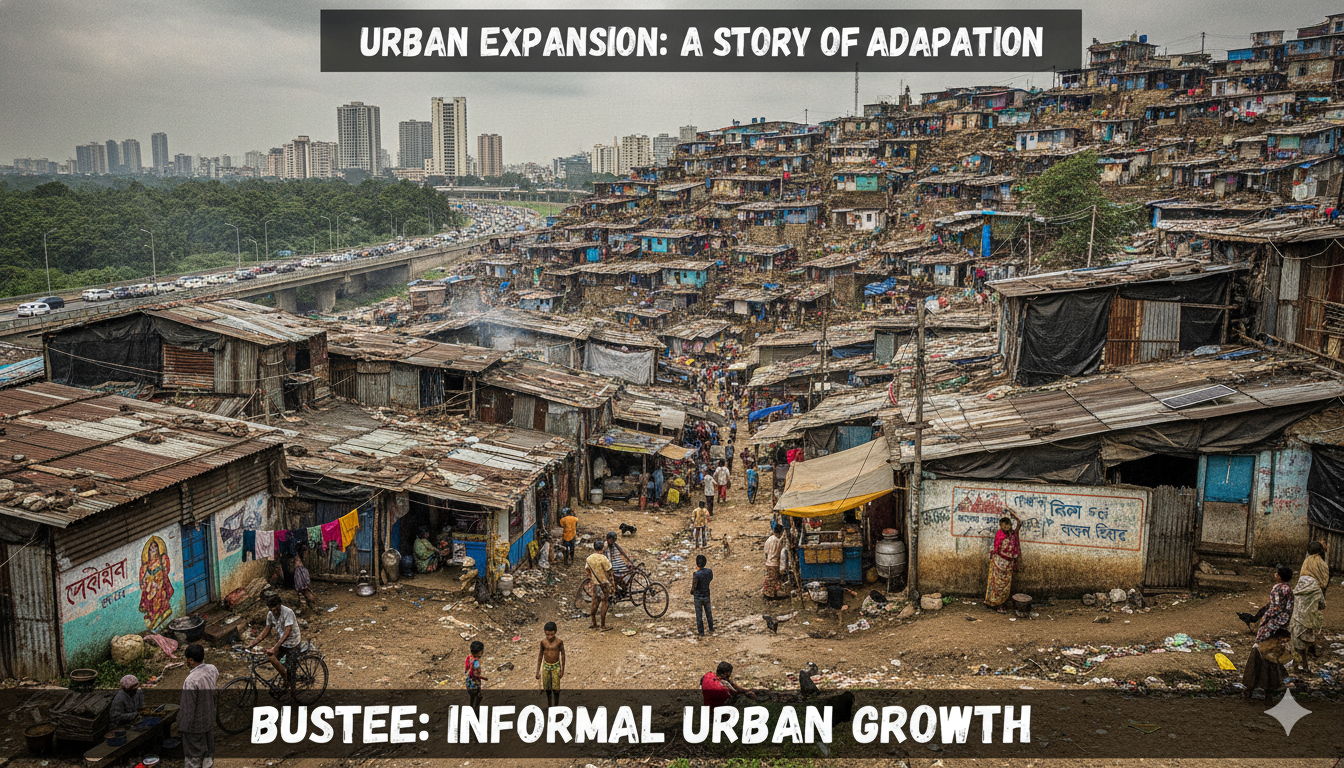
Have you ever come across a word that tells a deep story about how cities grow? The world of geography is full of unique terms. One such word is “bustee.” If you are wondering about the true Bustee Meaning, you have come to the right place.
At first glance, it might look like a complex technical term. However, it simply refers to a specific type of housing area found in South Asia. Today, we will explore this word like a helpful peer. We will break down its history, its role in big cities, and what it looks like in real life. Let us dive into the details together!
What is the True Bustee Meaning?
To understand the bustee meaning, we have to look at its roots. The word comes from the Hindi and Urdu word basti, which means a dwelling place or a settlement. Over time, the spelling changed to bustee or busti in English books.
In geography, a bustee is defined as a slum or a neighborhood made of makeshift huts. These areas are usually found in or near large cities in India. They are built by people who need a place to live but have low incomes.
Bustee Definition: A collection of small huts standing on a plot of land, often lacking modern utilities.
The History of the Word Bustee
The history of this term goes back more than a century. It was first recorded in English writing between 1880 and 1885. British officials in India used it to describe local neighborhoods.
Originally, the Hindi root word just meant a place where people live. It did not have a negative meaning. As big cities grew rapidly, these areas became crowded. That is when the English bustee meaning shifted to describe poor, informal settlements.
How Official Rules Define a Bustee
Did you know that some places have legal rules for this word? In cities like Kolkata, India, the government has an exact definition.
An official bustee is defined as a collection of huts standing on a plot of land of at least one-sixth of an acre. If a group of small houses covers this much space, the city tracks it under this specific name. This helps the local government plan out aid and updates.
Quick Reference: Key Facts About Bustees
To help you see the big picture, here is a detailed breakdown of how these settlements operate in modern geography.
| Feature | Description |
| Primary Region | South Asia, especially North India and Bangladesh |
| Common Materials | Wood, corrugated metal sheets, cloth, and cardboard |
| Legal Status | Often built on informal or reclaimed city land |
| Main Challenges | Limited clean water, crowded spaces, poor drainage |
What Does a Modern Bustee Look Like?
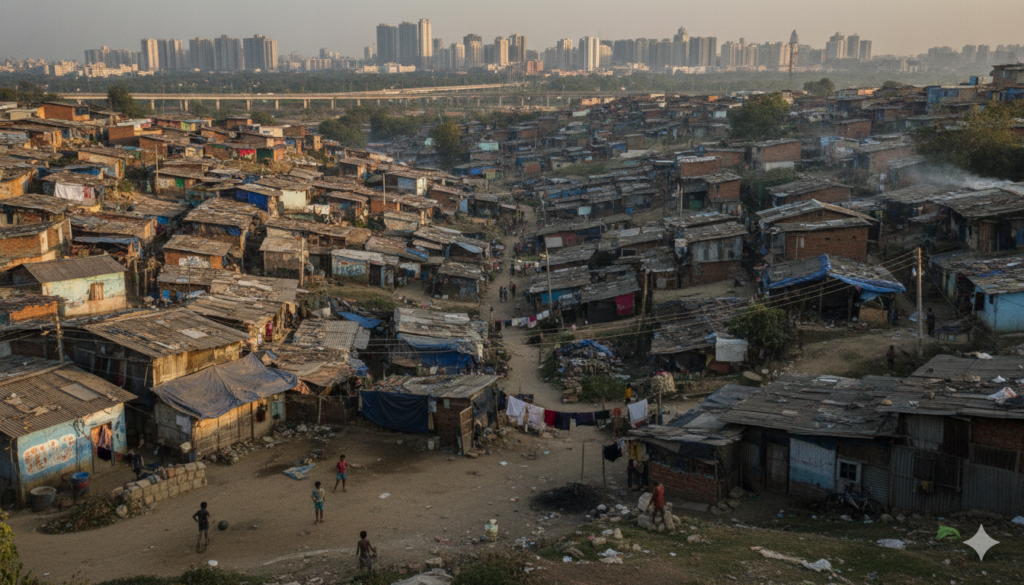
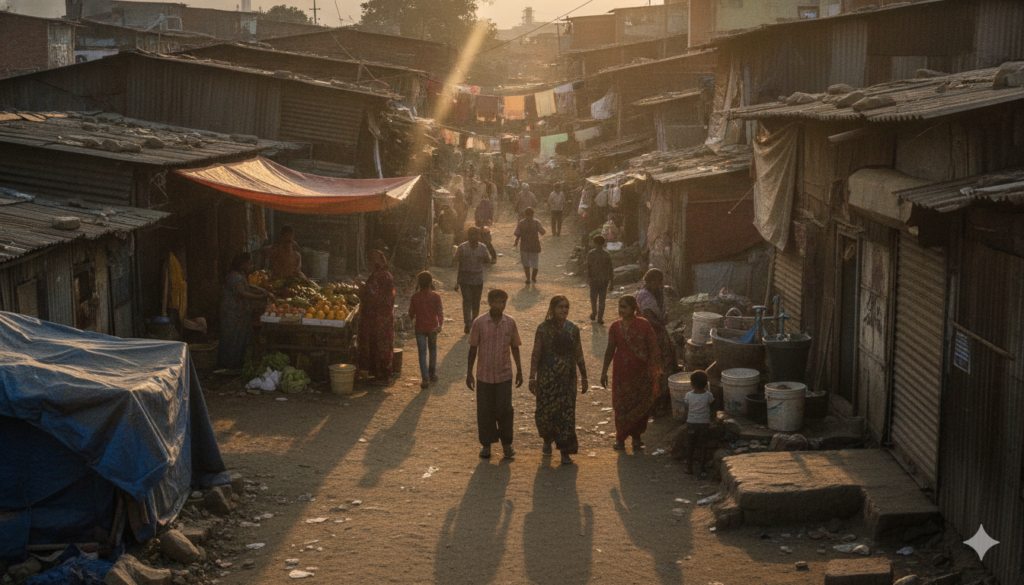
If you were to walk near one today, you would see a very busy neighborhood. The houses are often built very close to each other. People use materials like tin sheets, wood, and plastic to protect their homes from rain.
Even though resources are low, these areas are full of life. You will find small shops, children playing, and neighbors helping each other. The bustee meaning is not just about old buildings; it is also about a strong sense of community.
Why Do Bustees Form in Big Cities?
Cities grow fast because people move there looking for work. When housing prices are too high, families have to find alternative options.
This economic gap is the main reason why these informal areas form. People build their own homes close to factories or train yards so they can walk to work. It is a practical choice made by people trying to build a better life.
The Big Difference Between a Bustee and a Slum
People often use the words slum and bustee to mean the same thing. While they are very similar, there is a small difference in geography.
A slum is a general global term for any poor, crowded urban area. On the other hand, the bustee meaning is tied specifically to the culture and history of South Asia. It carries a unique regional identity that global words do not capture.
How Governments Help Improve These Areas
Living in an informal settlement can be very tough during heavy rains or hot summers. Because of this, city governments launch special programs to help out.
Instead of tearing down the huts, many cities choose to improve them. They build concrete pathways, install shared water taps, and bring in electricity. These updates make a massive difference for the families living there.
The Academic Side: Bustees in School Geography
If you are a student, you might see this term in your human geography textbook. Teachers use it to show how cities expand over time.
Learning the bustee meaning helps students understand urban development. It shows that cities are not just made of shiny skyscrapers. They are also shaped by the everyday needs of working-class citizens.
Why Understanding This Term Matters Today
Words help us see the world through a clearer lens. When we understand what this term means, we can better comprehend global news and urban planning.
It reminds us that housing is a major global issue. By learning about these unique neighborhoods, we develop a better view of how humans adapt to crowded city environments.
Conclusion: Share Your Thoughts!
The bustee meaning goes far beyond a simple dictionary definition. It represents history, human survival, and the unique ways our global cities grow every single day.
Did this guide help you understand this geography term better? Do you have any other unique words you want us to break down? Let us know your thoughts in the comments below!
Frequently Asked Questions
Is a bustee the same as a village?
No. While the old Hindi root word could mean a small settlement, the modern English definition specifically refers to an informal, poor urban neighborhood or slum.
Where did the word bustee come from?
It comes from the Hindi and Urdu word basti, which means “to dwell” or “a place to live.” The word entered the English language in the late 1800s.
What materials are these homes made of?
Most homes in these areas are built using cheap, accessible materials. This includes corrugated metal sheets, wood planks, tarps, and thick cardboard.
Which cities have the most well-known bustees?
You will find them in large South Asian cities. Kolkata, Mumbai, and New Delhi are common examples where these neighborhoods are tracked by the government.
Is a bustee illegal?
Many start out as informal settlements on public or unclaimed land. However, many city governments now recognize them legally so they can provide water and power.
