

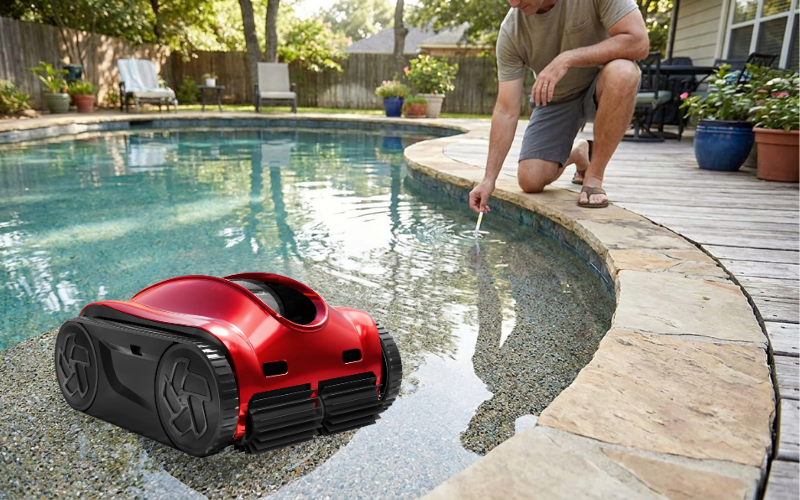
Saltwater pools are popular for good reason. The water often feels softer. The smell is usually less harsh. Many owners also feel that daily pool care becomes easier. But easier does not mean effortless. A saltwater pool still needs attention, and that matters even more when a robotic pool cleaner becomes part of the routine.
Many pool owners assume that a robotic cleaner will work the same way in every pool. That is not always true. Saltwater changes the environment. It affects surfaces, parts, residue, and long-term wear. A robotic pool cleaner can still be a very useful tool, but owners should understand a few key points before using one on a regular basis.
Saltwater Pools Are Different but Not Maintenance Free
A saltwater pool is not the same as a pool filled with ocean water. It still uses chlorine. The difference is that the chlorine is produced by a salt chlorination system. Salt is added to the water, and the system turns it into usable sanitizer.
That setup often feels more convenient. But the pool still needs testing, cleaning, and balance checks. Salt does not remove the need for maintenance. It only changes the way the system works.
Salt Changes the Long-Term Environment
The most important thing to understand is long-term exposure. Salt in the water can affect pool equipment over time. This does not mean everything will fail quickly. It means owners should think beyond short-term cleaning results.
When a robotic cleaner is used often in a saltwater pool, it is exposed to:
- dissolved salt
- moisture left on the machine after use
- mineral residue
- possible scale from unbalanced water
These factors may not create immediate problems. But they can increase wear if the cleaner is left wet, stored poorly, or used in water with unstable chemistry.
Water Balance Matters More Than Many Owners Expect
Some owners separate pool chemistry from pool cleaning. In practice, they work together. If the water is out of balance, the cleaner may still run, but the overall environment becomes harder on the machine and the pool itself.
High Salt and Poor Balance Are Not the Same Thing
Saltwater alone is not usually the biggest problem. Poor water chemistry is often the bigger issue. When pH rises too high, or calcium hardness is not controlled, mineral scale may start to form. That scale can collect on pool surfaces and equipment. It can also create extra residue that a cleaner has to work around.
If the water stays balanced, the cleaner usually works in a more stable setting. If the chemistry swings too often, maintenance becomes harder for everything in the pool system.
Consistent Testing Supports Better Cleaning
A robotic cleaner is not a replacement for water care. Owners should still test:
- pH
- salinity
- calcium hardness
- sanitizer levels
Steady chemistry helps the cleaner perform better over time. It also reduces the chance of buildup on filters, brushes, and internal pathways.
Rinsing After Use Should Be a Normal Habit
This is one of the most overlooked parts of robotic cleaner care. Many owners remove the cleaner from the pool and assume that is enough. It is not.
After a cleaning cycle, salt residue can stay on the machine. Water may remain trapped around wheels, filter compartments, and lower housing areas. If the unit is left like that, residue can dry in place.
Fresh Water Rinsing Helps Reduce Residue
A quick rinse with fresh water helps remove salt and fine debris. It also helps wash away chemical residue that may stay on the cleaner after a cycle.
This does not need to be complicated. A short rinse is often enough. The main goal is to avoid repeated drying of salty water on the machine.
A Small Habit Can Support Longer Service Life
Owners often focus on suction, coverage, or cleaning time. Those points matter. But small habits often matter just as much. Rinsing after use is a simple step. Still, it can make regular use in a saltwater pool much more manageable over time.
Filter Care Is Especially Important in Saltwater Conditions
Salt itself is dissolved in water, so it does not collect in the filter like leaves or twigs. But saltwater pools can still create fine residue. Dust, pollen, small debris, and mineral particles may all end up in the cleaner.
If the filter is not cleaned often enough, water flow drops. When flow drops, cleaning efficiency also drops.
Dirty Filters Can Reduce Cleaning Quality
A robotic cleaner depends on good internal flow. If the filter is packed with debris, several things may happen:
- weaker pickup
- slower movement
- missed areas
- less consistent results
That is why filter cleaning should be part of the routine, not something saved for later.
Frequency Depends on Pool Conditions
Pools near trees, open yards, or windy areas usually need more frequent filter checks. Heavy pool use can also increase the load. In these conditions, owners should inspect the filter after every cycle or every few cycles at most.
Storage Habits Can Affect Long-Term Performance
How the cleaner is stored matters almost as much as how it is used. Some owners leave the unit in the pool for days. Others leave it on a hot pool deck in direct sun. Both habits can create avoidable stress.
Do Not Treat Water Exposure as Neutral
In a saltwater pool, longer immersion means longer exposure to salt and chemicals. Even if the cleaner is designed for pool use, keeping it in the water all the time is not the best habit for regular care.
Removing the unit after a cycle is usually the safer approach.
Dry Shade Is Better Than Sun and Standing Moisture
After rinsing and emptying the filter, the cleaner should be stored in a shaded and dry place. This helps reduce heat stress and limits the chance of residue drying onto surfaces.
For many owners, easy handling becomes part of this decision. A design such as the iGarden cordless robotic pool cleaner may fit a simple remove-rinse-store routine more naturally, but the larger point is that any cleaner used in saltwater conditions should be easy to maintain between cycles.
Robotic Cleaning Still Has Limits in Saltwater Pools
A robotic cleaner can reduce manual work, but it does not solve every pool problem. Owners should keep expectations realistic.
It Helps With Routine Cleaning
A robotic cleaner is very useful for regular debris removal. It can help with:
- dirt on the floor
- light wall buildup
- day-to-day debris control
That makes weekly maintenance easier and more consistent.
It Does Not Replace Full Pool Care
It will not fix cloudy water caused by poor chemistry. It will not replace checking the salt cell. It will not remove every form of scale if mineral buildup becomes severe. Some brushing and manual inspection will still be needed.
That is normal. The best results come when the cleaner is part of a complete care routine.
What Owners Should Keep in Mind Before Regular Use
Saltwater pools and robotic pool cleaners can work very well together. In many homes, they are a practical match. But success depends on understanding the environment.
Focus on the Basics
Before regular use, owners should remember these points:
- keep water chemistry stable
- rinse the cleaner with fresh water after use
- clean filters often
- store the unit in a shaded and dry place
- do not expect the cleaner to replace all pool maintenance
Build a Simple Routine
The best approach is not complicated. It is consistent. When owners combine balanced water, proper rinsing, filter care, and reasonable storage, robotic cleaning becomes much easier to manage in a saltwater pool.
A saltwater pool may feel gentler on swimmers, but it still creates a specific maintenance environment. Owners who understand that early usually get better cleaning results and fewer equipment problems over time.
